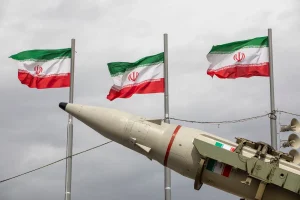
On March 12, the Sudan Armed Forces (SAF) recaptured the national radio and television building in the town of Omdurman, which since the beginning of the conflict has been in the hands of the Rapid Support Forces (RSF) under the command of General Dagalo. The capture is part of a resumption of fighting characterized by a strong growth in military capabilities by the SAF after months of defeats and strenuous defense of their outposts, especially in the central and northern parts of the country. This upswing in capability was certainly supported by the entry into service of new combat drones supplied by Iran to the government forces of General al-Burhan, and the concomitant weakening of the defense capability of the SAF, which nonetheless control large areas of territory in the capital area and the central and southern regional states.
An apparent shift in capability on the Sudanese civil war front, which led General al-Burhan to formulate openings toward the RSF for a cessation of the conflict, however, placing conditions that immediately appeared unacceptable to General Dagalo, and which in fact presupposed a surrender of the RSF.
The hope of a cessation of hostilities for the month of Ramadan thus soon faded, with the concomitant increase in attacks by the SAF in several districts of the capital Khartoum and the satellite city of Omdurman, where large parts of the city returned after nearly a year under the control of government forces.
The new military capability demonstrated by the SAF forces, however, is also being interpreted in Sudan as a clear sign of the ever-closer cohesion between the top leadership of the armed forces and Islamist organizations once loyal to deposed dictator Omar al-Bashir, who have reportedly forged a new partnership in light of the common threat posed by General Dagalo’s paramilitary militias. This is actually not a new fact in light of repeated reports of such an alliance over the past few months, but one that may have morphed in more recent times into full-fledged military coordination on the ground.
Embedded within Sudan’s military crisis, moreover, is a concomitant humanitarian crisis brought about by the prolonged impediment for international organizations to distribute food and medicine in the country, with now catastrophic consequences about which the United Nations recently sounded the alarm, calling on the parties involved in the clashes to facilitate the distribution of aid to prevent the already severe crisis from escalating with unimaginable consequences.
Of particular concern is the situation in the Darfur area, where Governor Minni Arko Minnawi had signed an agreement with some international organizations for the delivery of aid, and where on the contrary the RSF have not recognized the validity of that agreement by preventing the transit of trucks from Port Sudan through the Al Dabba road. This is a major blow to the local population, which is now exhausted by hunger and the constant incursions of the various militias, particularly targeting ethnic African communities, in the ongoing ethnic conflict that has seen ethnically Arab groups systematically targeting people of African descent.
At the same time, the RSF are conducting forced enlistment campaigns in the Gezira region, which they captured last December, using the food weapon to force local populations to support the military effort against SAF forces. The Gezira region, referred to as the “breadbasket of Sudan,” is of vital importance to the contenders for two reasons. The first is that related to production capacity in the grain sector, potentially being able to supply much of the foodstuffs needed to feed the country’s population, while the second is related to its particular geographical location, where the country’s main road axes intersect in the connection between the northern and southern areas. A strategic point of which both sides intend to secure control, without any interest, however, for the civilian population residing in the area, where a large number of displaced people from the capital region have also poured in over the months, hoping to escape the ongoing violence.
Although the renewed offensive capability of the SAF has been read by much of the Western press as a shift in the balance on the ground in the Sudanese civil war, not a few in the country wonder whether this new scenario is in fact only temporary and potentially changing. The SAF have indeed prevailed against limited targets in the urban areas of Khartoum and Omdurman, recapturing some neighborhoods through the massive use of armed drones, but the reconquest of Gezira state and Darfur appear at this time to be quite different goals that are difficult to achieve without a real strengthening of the SAF’s economic apparatus and supply logistics chain, suggesting the real possibility of a stagnation of the conflict and its continuation through phases of varying intensity.