The Saudi satellite channel Al Hadat interviewed General Yasir Al-Atta, deputy commander of the Sudanese Armed Forces (SAF), on May 25, confirming that the chairman of the Sovereign Transitional Council, General Abdel Fattah Al-Burhan, would discuss a number of agreements with Russia as part of possible military cooperation. These agreements would provide for Russia to supply Sudan with large quantities of armaments, vital for the government of Khartoum to break the deadlock in the conflict with the rebel militias of the Rapid Support Forces (RSF), in return for granting Russia the right to build a logistical naval base for its navy in Port Sudan on the Red Sea.
Arousing curiosity is the fact that the Saudi satellite broadcaster Al Hadat had been suspended from broadcasting in Sudan last April 2 at the behest of the Ministry of Information of the Sovereign Transitional Council, which had accused Al Hadat (along with Al Arabiya and Sky News Arabia) of “lack of professionalism and transparency,” in addition to non-renewal of licenses.
The project to build a Russian naval base in the country had been already discussed before the civil war, during the tenure of PM Abdalla Hamdok, who later resigned in 2022 following the strong suppression of protests over the failure to transition to a civilian government. The United States had then exerted enormous pressure on the government in Khartoum to discourage it from granting Russia a naval base on its territory, offering instead economic incentives later also linked to the normalization of relations with Israel, which finally foundered with the beginning of the civil war.
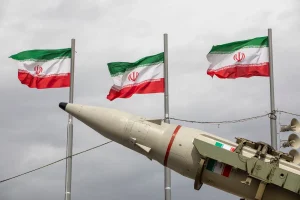
In addition to the possible cooperation with Russia, General Al-Atta also expressly admitted that the SAF had received from Iran an unspecified number of Mohajer-6 combat drones, thanks to which it had been possible to achieve some military victories especially in the area of the capital’s satellite city, Omdurman.
The announcement of the possible agreement with Russia came in a rather peculiar narrative context, where General Al-Atta first presented President Al-Burhan’s apology to the Sudanese people for the delay in achieving the objectives announced in the conflict against the RSF, adding, however, how the situation has now changed thanks to the reorganization of the military and paramilitary forces, where it will be soon possible to deploy 12 mixed battalions. In this context, it is hinted, Russia’s military support would be a vital asset to finally defeat the forces under the command of General Dagalo and restore order in the country.
Ambitions that must, however, be measured against the complex realities of the Sudanese civil conflict, especially in light of the contextual and notorious covert support provided at least until the more recent past by the former Russian Wagner, now the African Legion, to General Dagalo’s RSFs, with the aim of boosting revenues from the lucrative illegal gold market. This support is said by some to still be in place, and it is unclear how it could be reconciled with the terms of the announced agreement the Khartoum government intends to sign with Russia on the subject of military cooperation.
In a recent visit to Port Sudan on April 28, Russian Deputy Foreign Minister Mikhail Bogdanov said that Russia attributes the legitimate sovereignty of the country’s government to the forces of the Sovereign Transitional Council, opening explicitly in the direction of unambiguous support for the SAF under the orders of General Al-Burhan. This could mean a general shift in strategy on Moscow’s part, with the concomitant abandonment of General Dagalo and the pursuit of access to the country’s mineral resources through the SAF’s victory especially in the regional state of Darfur, where the largest amount of gold is produced and which is currently largely controlled by the RSF.
Such a shift, however, if actually confirmed, would lead to two orders of problems. The first in the relationship between Moscow and Abu Dhabi, which until now seems to have supported the RSF forces in order of countering the threat coming from Islamist forces supporting General Al-Burhan. The second, on the other hand, is related to the actual ability of the SAFs to defeat the RSFs, which to date have proven to be more flexible and capable on the battlefield. Although SAF forces have scored some victories over the RSFs, especially in the aftermath of Iran’s supply of drones, at present the conflict appears to have entered a stagnant phase again, which Khartoum intends to revive through the influx of Russian-supplied weapons. Although such supplies could probably enable the SAF to recapture all or part of the capital area and the satellite town of Omdurman, it is instead less certain the assumption of a quick and large-scale victory in the regional state of Darfur, where the presence and capacity of the RSF still appears to be quite efficient.
Finally, a last and not insignificant element is that related to the future of the peace talks sponsored by the United States and Saudi Arabia, which were supposed to resume in Jeddah last May 15 but were postponed and finally officially rejected on May 29 by the Sudanese government. In fact, the vice chairman of the Sovereign Transitional Council, Malik Agar, communicated the Khartoum government’s refusal to participate in the negotiations, citing the lack of prior coordination and the absence of clear objectives on which to set the talks. Agar also added how the conflict in Sudan has been exacerbated by the interference of external actors such as the United Arab Emirates, the United States and the European Union, clearly showing how and how much the context of interlocution with Washington has changed as a result of the renewed relationship with Moscow.