The possibility of a cease-fire in Lebanon between Hezbollah and Israeli forces seems within reach. The White House’s special envoy for the Middle East, Amos Hochstein, who has been in Beirut since Nov. 19 to convey the negotiating proposal prepared by the United States and to facilitate its acceptance by the various groups of Lebanese politics, and especially the Hezbollah party-militia, seems convinced of this.
Hochstein met in the Lebanese capital with Parliament Speaker Nabih Berri, who is also negotiating on behalf of Hezbollah to discuss the details of the possible agreement with outside actors, Prime Minister Najib Mikati and Armed Forces Chief of Staff Joseph Aoun.
Berri, in a meeting with a number of journalists, commented on the proposal prepared by the Americans, describing it as good in principle, and adding how in his opinion only a few minor adjustments are needed. One of his close advisors had already anticipated the previous day that Hezbollah’s top leadership had also in fact accepted the terms of the proposal, confirming the perceptions that have been accompanying the debate on the issue for days, and which converge in stating that the Shiite party now has a concrete interest in the negotiated solution.
At the same time, some media linked to the Christian-Maronite area have disseminated a report – lacking official corroboration to date – that Israel’s Minister for Strategic Affairs, Ron Dermer, conveyed through Russia a proposal to the Syrian government, offering to intercede with the U.S. government for the removal of sanctions targeting Damascus in exchange for a tangible commitment by Bashar al-Asad to permanently halt the flow of weapons to Hezbollah along the Syrian-Lebanese border. The proposal, according to the media, was formulated by Dermer during his recent trip to Russia – the official details of which are not known – where he reportedly asked the government in Moscow for an effective support in resolving at least part of the regional crises, through its ability to engage especially with the governments of Iran and Syria.
However, the notes of optimism registered by Lebanese politics and White House Special Envoy Hochstein are accompanied by a cautious silence from Israel, which awaits the visit of the U.S. envoy to assess the observations raised by the Lebanese political environment.
It seems clear that the security priority for Tel Aviv is the conflict in Gaza, and that the possibility of a cease-fire along the northern borders is being considered with interest to relieve military pressure on the country. Should the conditions demanded by Israel not be fulfilled on the Lebanese side, however, Prime Minister Netanyahu has already expressed his intention to continue the military operation with the intention of striking increasingly hard at Hezbollah forces.
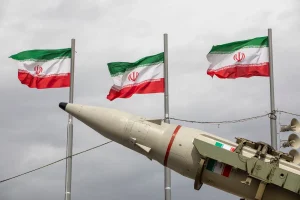
At the same time, the Islamic Republic of Iran also shows a fair amount of interest in the possibility of a ceasefire in Lebanon. An agreement, in fact, would allow the governing establishment to mitigate the increasingly strong urges of the ultraradical forces in its political environment, which are calling for military retaliation against Israel, while turning the ceasefire in Lebanon into a condition capable of considering the dimension of the confrontation with Tel Aviv closed for the time being.
A razor’s edge negotiation, then, which nevertheless seems to be moving on a constructive and concrete track, fostered by each side’s interest in achieving an outcome for its own specific political agendas.